The transaction
8 WhatsApp Marketing Software Solutions for CRM Workflows
A purchase is a sequence of checks, not a single decision. Knowing the order matters, because the money and the commitment enter at different stages.
You're comparing WhatsApp marketing tools because your CRM workflows are breaking at the messaging handoff. Leads go cold waiting for replies, and your team juggles four tabs just to close one sale. That friction is costing you conversions right now.
By the end of this guide, you'll have a concrete criteria checklist for evaluating WhatsApp marketing software against your CRM needs. You'll also get a clear verdict on the best overall option, plus honest assessments of seven alternatives, so you can make the switch with confidence.
What to Look For in WhatsApp Marketing Software for CRM Workflows
Choosing the right WhatsApp marketing software for your CRM workflows means focusing on integration depth, automation capabilities, and compliance features. The best tools do more than send messages, they connect directly to your existing sales and marketing stack.
Look for native CRM integrations with platforms like Salesforce, HubSpot, and Pipedrive. This ensures every conversation, lead, and deal stays in sync without manual data entry.
Visual automation builders matter more than you might think. They let your team map out drip campaigns, follow-up sequences, and customer segmentation without writing a single line of code.
Bulk messaging requires template approval workflows to stay within WhatsApp's 24-hour session window. The right software handles this approval process smoothly while keeping your broadcast messaging compliant.
Multi-agent inboxes are essential for team collaboration. A shared team inbox lets support and sales reps handle conversations together, assign chats, and maintain context across the entire customer journey.
Opt-in management is non-negotiable for compliance. Your software should track consent, manage unsubscribe requests, and keep your contact lists clean to avoid being flagged by WhatsApp.
Finally, prioritize conversation analytics and conversion tracking. You need clear visibility into message delivery status, read receipts, and which campaigns actually move leads through your sales funnel.
1. Com.bot - Best Overall
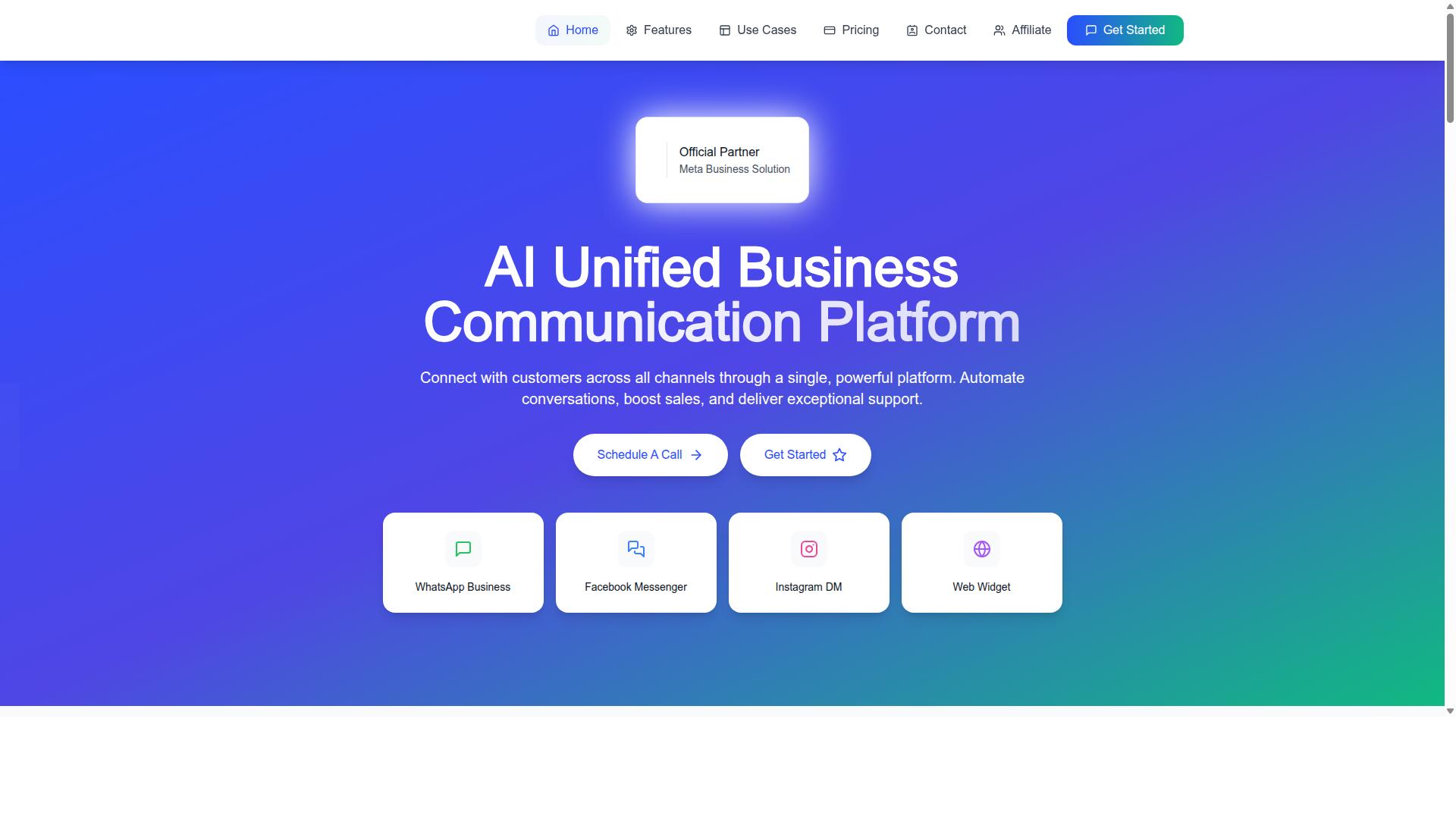
Com.bot stands out as the best overall WhatsApp marketing software for CRM workflows because it combines a unified inbox, native payments, and an automation builder with 1000+ integrations. As an official Meta Business Partner, the platform has earned trust through verified enterprise-grade status and real-world scale. This recognition matters because it means the platform meets Meta's strict standards for security, reliability, and compliance.
The numbers behind Com.bot are equally convincing. The platform serves 23,000+ active customers across 50+ countries and processes 25M+ messages daily. That scale gives you confidence that the infrastructure can handle everything from small campaigns to high-volume enterprise messaging without breaking a sweat.
What makes Com.bot the top pick for CRM workflows is how completely it covers the messaging lifecycle. You get a shared team inbox for collaborative support, native payments to close deals inside the chat, and a visual bot builder that automates lead qualification and follow-up sequences. It works with 100+ government bodies and 500+ global partners, which shows the platform's reach across industries and regulatory environments.
Below, we break down the two capabilities that matter most for CRM integration and marketing automation.
Unified Inbox and Native Payments for Seamless CRM Integration
Com.bot's unified inbox brings WhatsApp, Facebook Messenger, Instagram DM, and web widget conversations into one place, syncing every interaction with your CRM. Your team stops switching between tabs and apps just to find a customer conversation. That single view reduces response time and keeps context intact across every touchpoint.
The shared team inbox is built for collaboration. Multiple agents can work the same queue, assign conversations, and track who is handling what. This is especially valuable for support teams that need to manage high volumes without losing track of individual customer threads.
Native payments for WhatsApp transactions are a game-changer for sales workflows. You can send payment requests and collect money without forcing the customer to leave the chat. That means fewer drop-offs at the payment stage and a smoother path from conversation to closed deal.
For CRM integration specifically, contact sync and pipeline management work together to keep your data fresh. Every message, lead, and deal update flows back into your CRM automatically. This eliminates manual data entry and ensures your sales funnel always reflects the latest customer activity.
Automation Builder with 1000+ Integrations and Bulk Messaging
The visual bot builder with drag-and-drop functionality lets you create complex automation flows without coding, while bulk messaging handles large-scale campaigns. You can design lead qualification paths, drip campaigns, and follow-up sequences that respond to customer behavior in real time. The platform has already powered 100K+ bots created, which shows the builder's maturity and flexibility.
Personalized messaging goes beyond simple text. The automation builder supports rich media like images and videos, plus quick replies and interactive buttons that keep conversations engaging. These elements make your automated messages feel human and relevant, which improves response rates and customer satisfaction.
The 1000+ integrations are where Com.bot truly shines for CRM workflows. You can connect your existing CRM, marketing tools, and business applications without building custom code. This means your WhatsApp automation plugs directly into the systems your team already uses every day.
Bulk messaging is built for compliance and reliability. The platform handles message template approval, so your broadcasts meet WhatsApp's policy requirements. It also manages API rate limits and provides message delivery status, giving you visibility into whether each message reached its intended recipient. This level of control matters for broadcast messaging at scale, where deliverability directly impacts campaign results.
2. ActiveCampaign
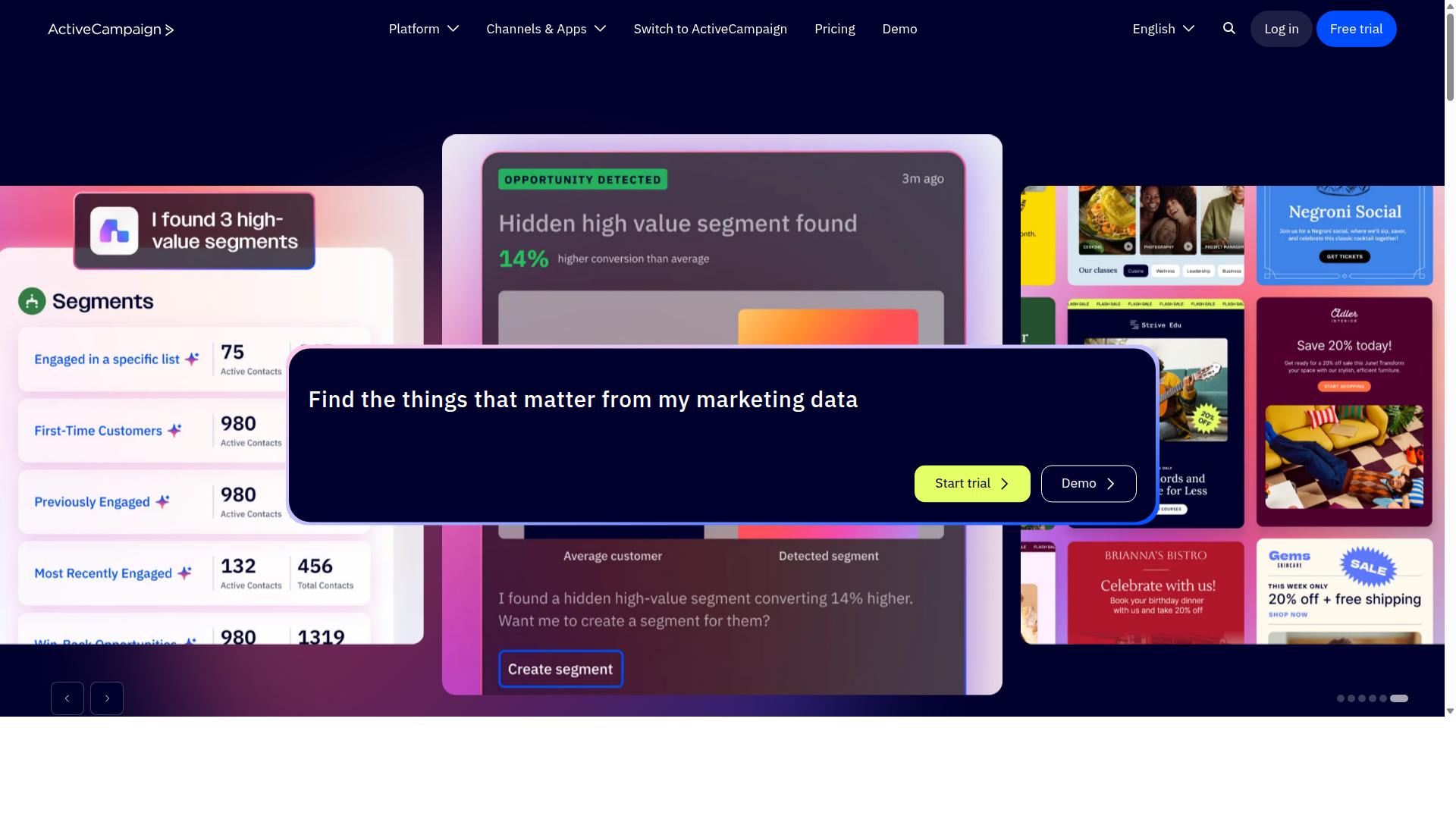
ActiveCampaign is a strong contender for businesses already using its email marketing and automation suite, but its WhatsApp integration is limited. The platform positions itself as a multi-channel marketing automation solution that can bring WhatsApp campaigns together with email, SMS, and CRM workflows in a single system.
ActiveCampaign offers official WhatsApp Business API support through its platform, which is a notable advantage over tools that rely on unofficial workarounds. Users can build automated sequences, send broadcast messaging, and manage two-way conversations alongside their existing email drip campaigns.
The shared inbox feature helps teams handle WhatsApp conversations without leaving the ActiveCampaign interface. Segmentation and personalization tools allow marketers to tailor messages based on customer behavior and CRM data, which keeps follow-up sequences relevant and timely.
Keep in mind that pricing is tiered based on contacts and features, with a free trial available. WhatsApp API usage and conversation fees are billed separately, so factor those costs into your budget when comparing total expenses.
ActiveCampaign is best for businesses that want an all-in-one marketing automation platform with WhatsApp as one channel among many. If your priority is a deep, purpose-built WhatsApp CRM experience rather than a broader marketing suite, you may want to evaluate dedicated options that put chat at the center of the workflow.
3. WATI
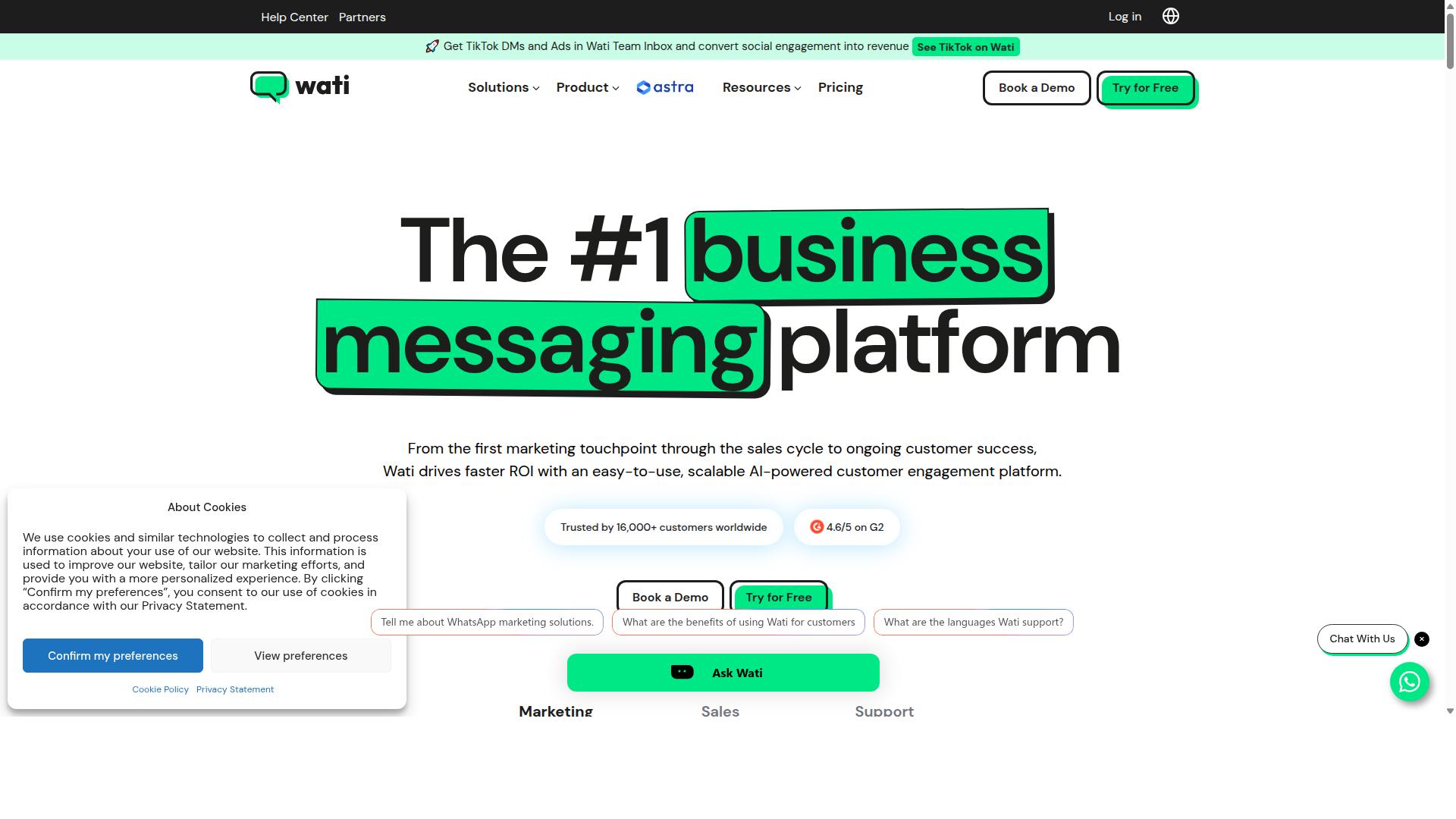
WATI offers a user-friendly WhatsApp Business API platform with a shared team inbox and broadcast tools, but it may lack advanced CRM features. The platform is designed for teams that want to get up and running on WhatsApp quickly without a steep learning curve.
Its shared team inbox is a standout feature for small to mid-sized businesses. Multiple agents can manage customer conversations from one place, which helps keep response times consistent and prevents messages from slipping through the cracks.
Template-based broadcasts allow you to send bulk messages using pre-approved WhatsApp message templates. This is useful for announcements, promotions, and seasonal updates, though you will need to manage opt-in lists carefully to stay compliant with WhatsApp policies.
Setup is straightforward, making WATI an attractive option for businesses that are new to the WhatsApp Business API. The onboarding process is designed to be simpler than some enterprise-grade alternatives, so you can start engaging customers sooner.
However, WATI may not be the best fit if you need deep CRM integrations or advanced marketing automation. Teams with complex lead nurturing workflows or sophisticated segmentation requirements might find the automation capabilities limiting compared to more robust platforms. For those needs, exploring tools with richer CRM connectivity is worth consideration.
4. Twilio
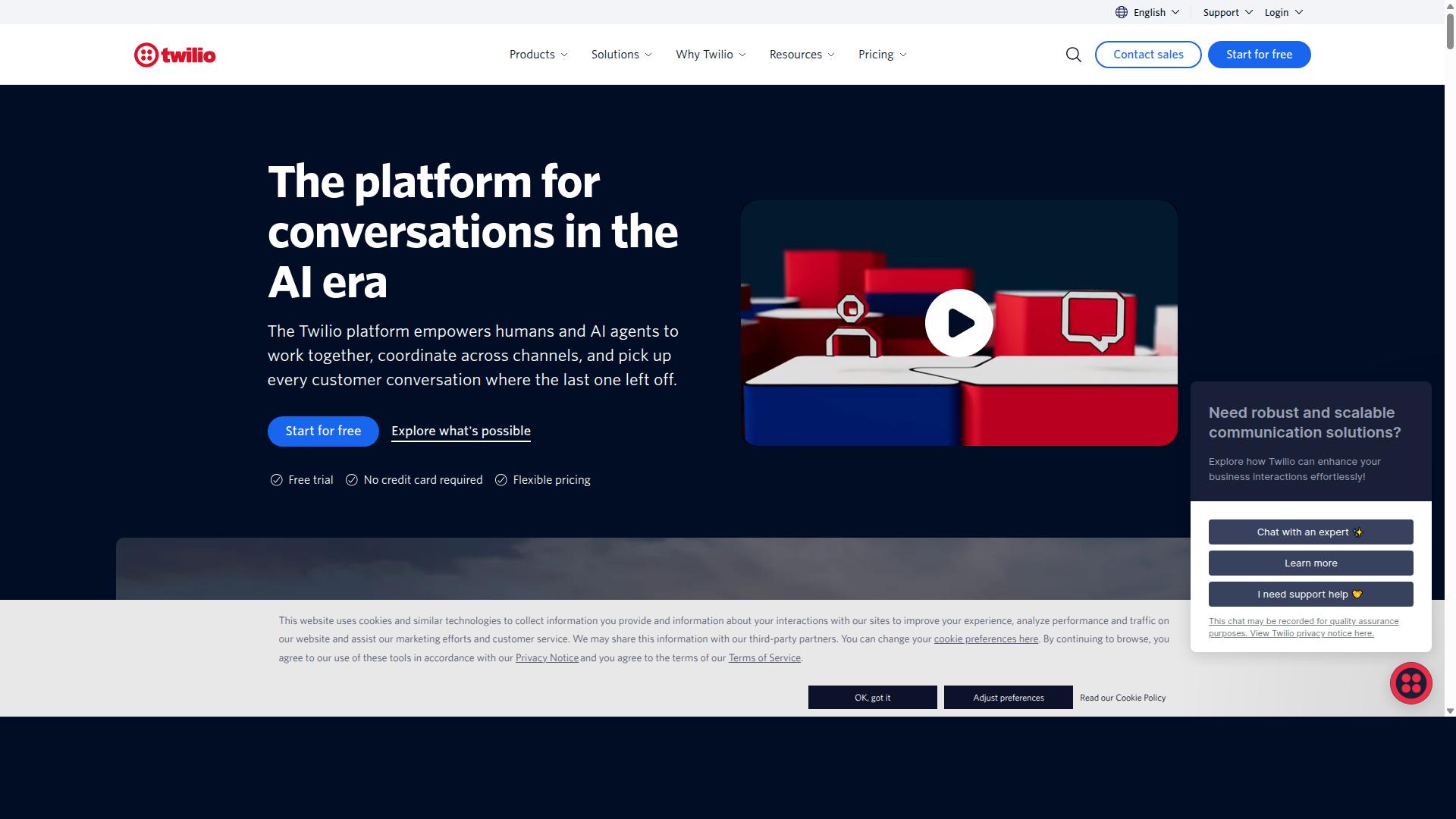
Twilio provides a powerful, developer-centric WhatsApp Business API that offers full control but requires coding skills. It is a communication powerhouse that enables businesses to integrate WhatsApp messaging directly into their existing systems. For teams with dedicated engineering resources, this flexibility is a major advantage.
The platform is built for custom solutions and scalability, making it a strong fit for enterprises with complex, unique requirements. You can design bespoke CRM workflows, automate intricate messaging sequences, and handle high volumes of traffic. However, this power comes with a steep learning curve that non-technical marketing teams will find challenging.
Key technical features include API rate limits and detailed message delivery status tracking. Rate limits determine how many messages you can send in a given timeframe, which is crucial for broadcast campaigns. Delivery status gives you visibility into whether messages were sent, delivered, or read, providing valuable data for your sales funnel.
The main trade-off is the need for in-house development. You will need skilled developers to build, maintain, and troubleshoot the integration. This approach offers unmatched control for those who need it, but it demands a significant ongoing investment in technical talent and time.
5. ManyChat
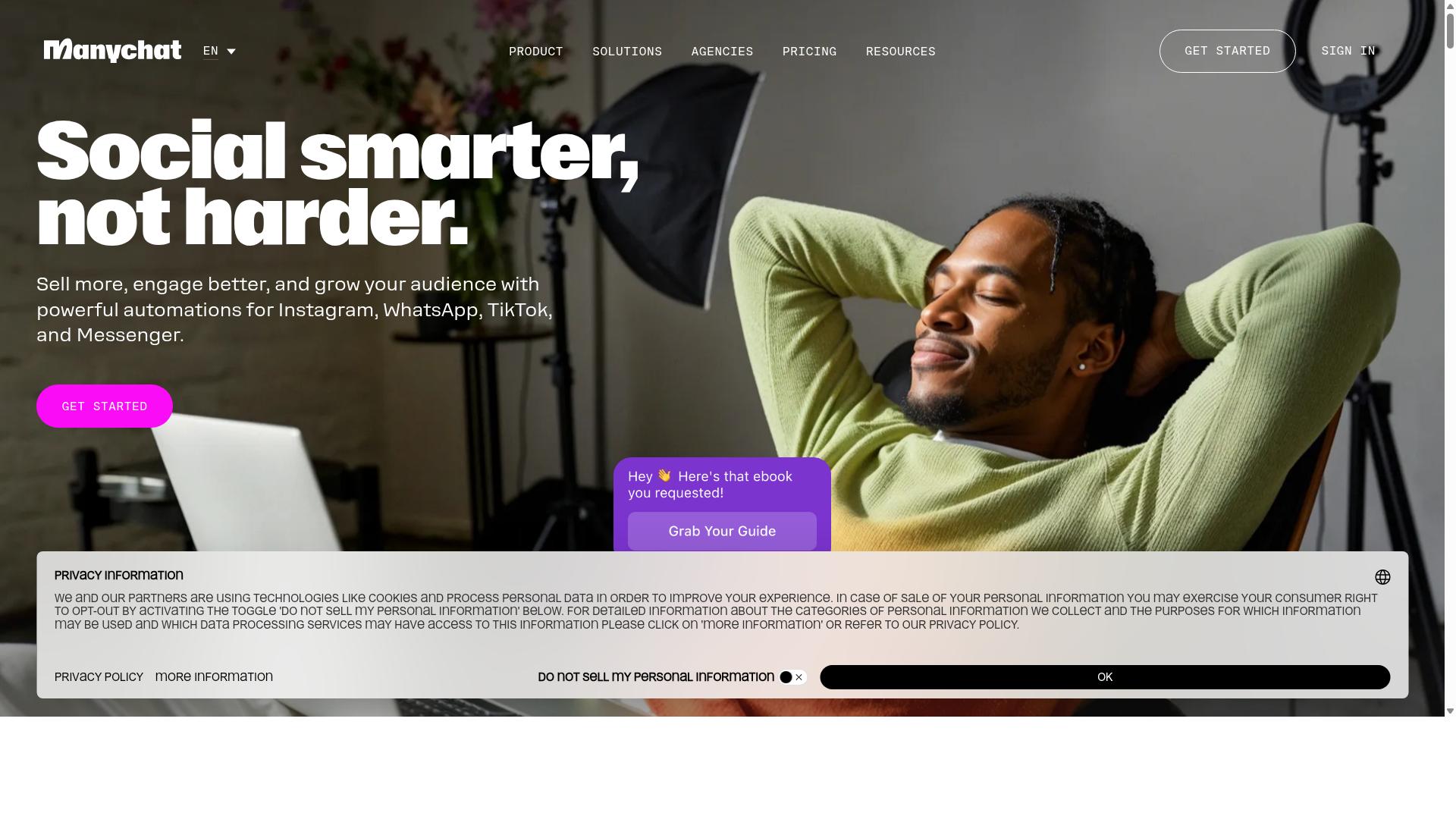
ManyChat is a popular choice for visual automation and click-to-WhatsApp ads, but it may not be ideal for complex CRM workflows. The platform is widely recognized for its chatbot and automation capabilities across social media and messaging channels.
Its visual flow builder makes chat automation approachable for beginners who want to create conversation paths without writing code. ManyChat also integrates well with advertising platforms, which makes it a strong fit for lead generation campaigns that start from ad clicks.
However, the CRM features are basic compared to dedicated sales tools. ManyChat works well for capturing leads and sending initial follow-up messages, but it lacks the depth needed for serious pipeline management or advanced customer segmentation.
Small businesses focused on lead generation will find ManyChat useful for automating first-touch conversations. Teams that need detailed contact sync, multi-agent inboxes, or complex follow-up sequences tied to sales stages may outgrow it quickly.
6. Respond.io
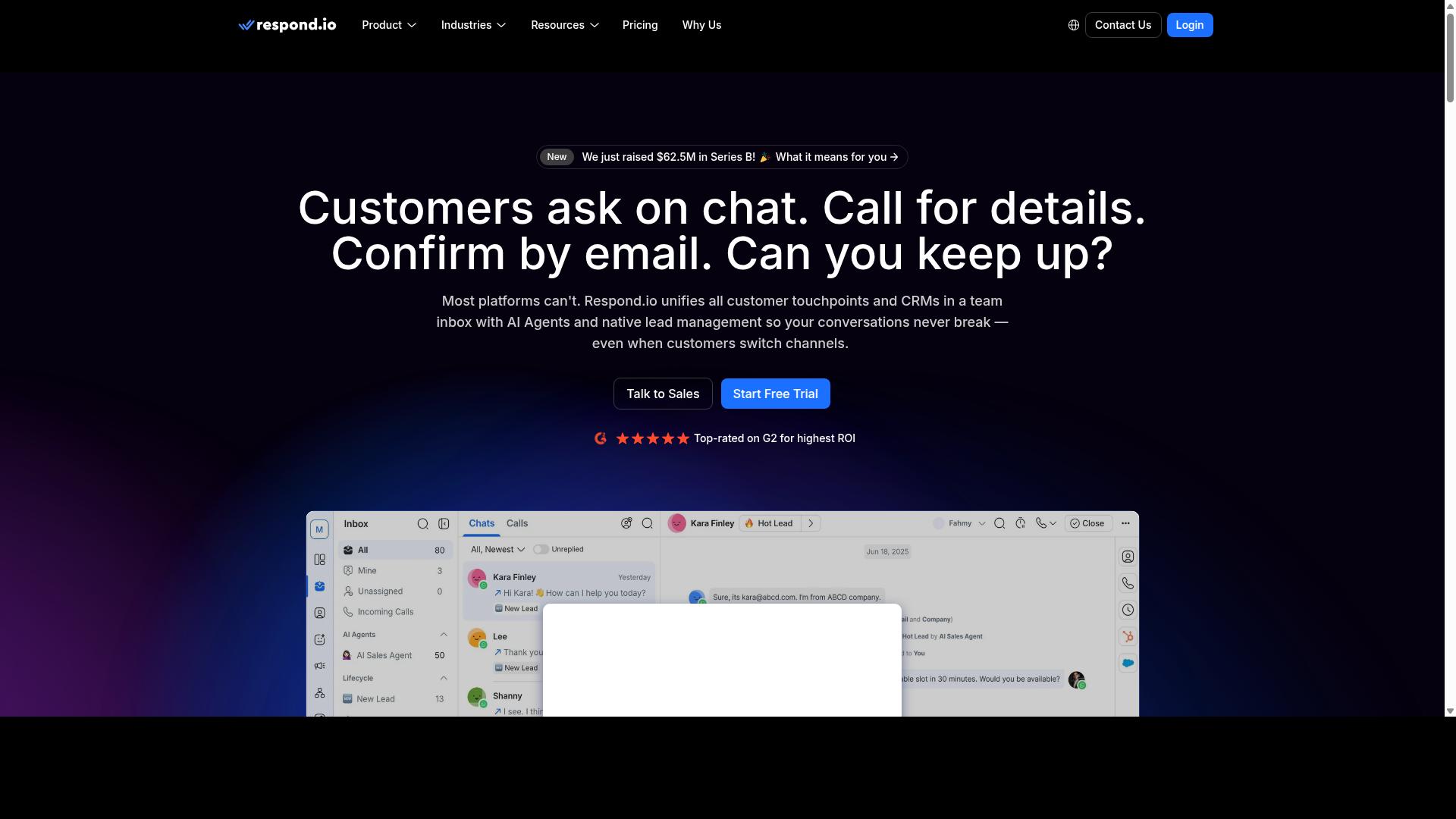
Respond.io excels in omnichannel inbox management and conversation analytics, making it a solid option for support teams. The platform centralizes customer conversations across multiple channels, including WhatsApp, into a single shared team inbox.
For teams that live in their inbox all day, this unified view is a major time-saver. Agents can handle chat, email, and social messages without switching between tabs or losing context.
Conversation analytics is another clear strength for Respond.io. The tool provides visibility into response times, conversation volume, and channel performance, which helps managers spot bottlenecks and improve team efficiency.
However, its marketing automation features may be less developed compared to dedicated tools. Teams looking for complex drip campaigns, advanced customer segmentation, or sophisticated follow-up sequences might find the options more limited.
Respond.io works best for support-heavy workflows where quick replies and organized inboxes matter most. If your primary goal is broadcast messaging and large-scale marketing campaigns, you may need to pair it with additional software.
For businesses that prioritize conversation management over marketing automation, Respond.io remains a credible choice. Just be clear about whether your workflow leans toward support or toward outbound marketing before committing.
7. Gupshup

Gupshup is an enterprise-grade WhatsApp Business API provider with strong broadcast capabilities, but it may be complex for smaller teams. The platform focuses heavily on AI-powered automation and engagement, making it a solid option for organizations that already have technical resources in place.
Its core strength lies in scalability and API robustness. Large enterprises can handle substantial message volumes, manage bulk campaigns, and maintain message templates across complex workflows without hitting typical bottlenecks.
However, this power comes with trade-offs. Gupshup generally requires technical expertise to configure and maintain, and the interface may not offer the user-friendly experience that smaller marketing teams expect from modern SaaS tools.
For CRM workflows, Gupshup works best when a dedicated developer can manage the integration and ongoing optimization. Teams without that capacity may find the learning curve steep compared to more intuitive alternatives that prioritize out-of-the-box setup and ease of use.
8. AiSensy
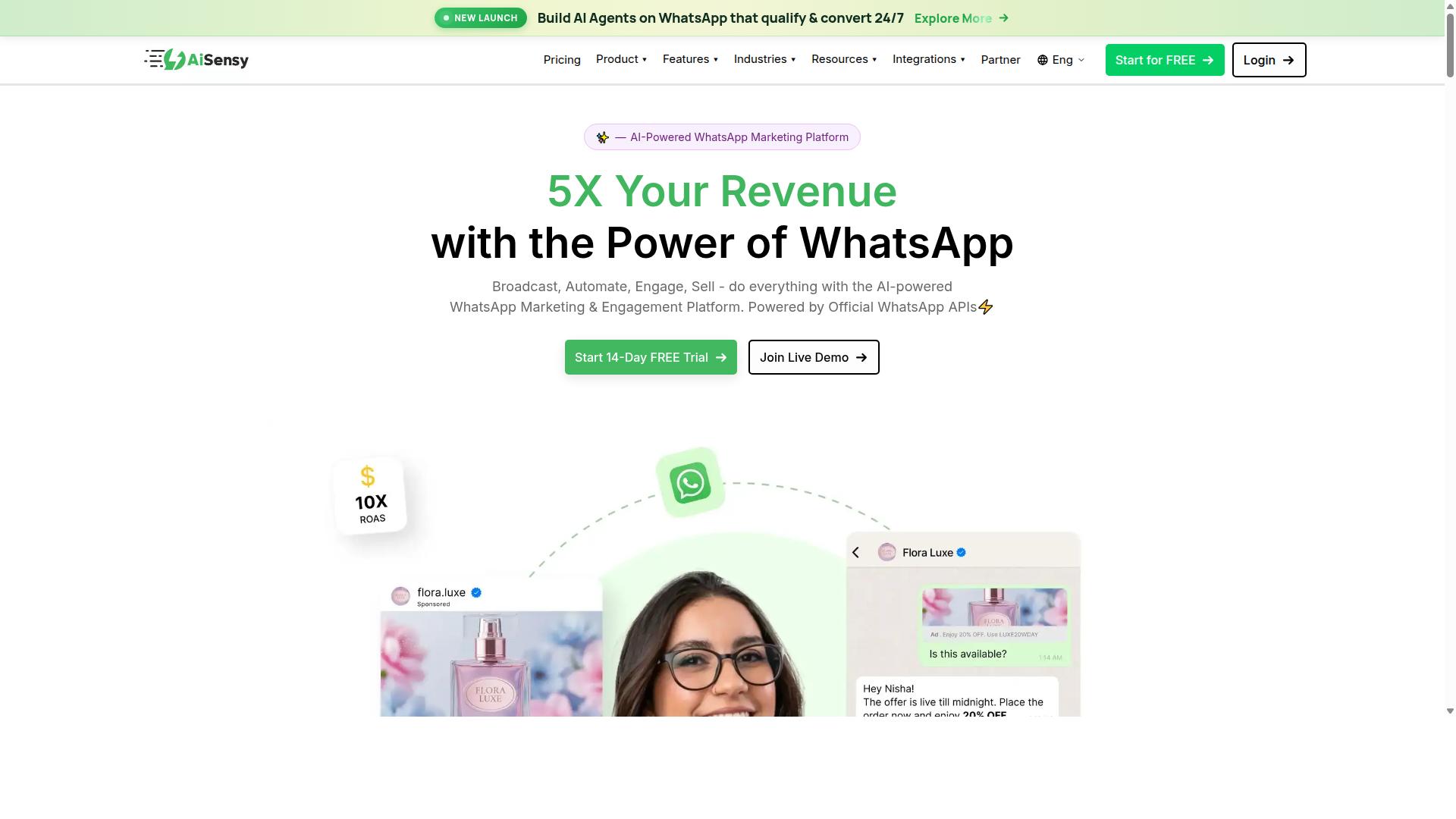
AiSensy offers affordable WhatsApp Business API solutions with easy broadcast tools, but its CRM integration may be limited. It is a practical choice for businesses that want to send promotional and transactional messages without a steep learning curve.
The platform focuses on ease of use for sending broadcasts and managing message templates. Teams can quickly set up campaigns and reach customers directly through WhatsApp, which makes it appealing for small and mid-sized operations.
However, AiSensy may not include advanced automation or deep CRM features. Businesses that need complex drip campaigns, detailed customer segmentation, or robust pipeline management might find the tool less suited to those workflows.
For simple messaging needs, AiSensy can be a cost-effective entry point into WhatsApp marketing. Research suggests that teams with basic broadcast requirements often prioritize affordability and simplicity over enterprise-grade functionality.
If your CRM workflow depends on rich contact sync, follow-up sequences, or multi-agent inbox management, you may need to check whether AiSensy covers those areas. It works well for straightforward outreach, but buyers with complex sales funnels should evaluate their options carefully.
How to Choose the Right Option
To choose the right WhatsApp marketing software, assess your CRM integration needs, automation complexity, and budget. Start by listing the specific workflows you want to improve, from lead generation to customer support ticketing.
Native CRM integration is the first filter. Some tools sync contacts both ways, while others only push messages one direction. Check whether the software connects directly to your existing CRM or requires middleware, since that affects setup time and ongoing maintenance.
Automation builder flexibility matters just as much. Look for tools that support drip campaigns, follow-up sequences, and customer segmentation without forcing you to code. The best options let you map WhatsApp flows to your sales funnel stages rather than bending your process to fit the tool.
Consider your team structure before comparing pricing tiers. A multi-agent inbox or shared team inbox is essential if multiple staff members handle conversations. Single-user tools work fine for solo operators but create bottlenecks as your team grows.
Your target audience should guide the final decision. Small businesses often need simple broadcast messaging and quick replies, while enterprises and government bodies require bulk messaging, order updates, and payment collection across WhatsApp, Facebook, and Instagram channels.
Com.bot fits organizations that need to automate and scale communication across those three channels. Its multi-channel approach supports customer support, bulk messaging, and payment workflows, making it a strong match for enterprises and government bodies with complex CRM requirements.
Finally, test the 24-hour window handling and opt-in management before committing. These features determine how you can follow up after a customer's session expires, which directly impacts your conversion tracking and overall campaign success.
Final Verdict
For most businesses, Com.bot is the best choice because it combines a unified inbox, native payments, and powerful automation with 1000+ integrations. It is the only tool on this list with an official Meta Business Partner status, which matters for long-term WhatsApp API stability. That partnership means your campaigns run on a compliant, enterprise-grade foundation rather than a workaround.
The numbers back up the positioning. Com.bot serves 23,000+ active customers, supports 100+ government bodies, and processes 25M+ messages every single day. Add 100K+ bots created and 500+ global partners, and you have a platform that has been battle-tested at serious scale. For CRM workflows, that scale translates into reliable message delivery and real-time responsiveness.
Com.bot is the top recommendation because it handles the entire WhatsApp marketing lifecycle in one place. Its automation builder connects directly to your CRM, enabling drip campaigns, follow-up sequences, and customer segmentation without jumping between tools. Multi-channel support means WhatsApp, email, and other channels share the same contact sync and pipeline management.
Every other tool on this list has strengths worth considering. Some excel at simple broadcast messaging, while others focus on ticketing or conversation analytics. However, none match Com.bot's combination of official Meta backing, end-to-end encryption, and no markup on WhatsApp conversations.
Consider your specific needs before committing. If you only need occasional blasts, a lighter tool may suffice. But if you want lead generation, click-to-WhatsApp ads, and a shared team inbox that scales with your sales funnel, Com.bot is the clear winner. It is the most complete WhatsApp marketing software for CRM-driven teams.
Recommended Resources:
Viewing, and what a viewing can tell you
A viewing is good at answering questions about layout, light, noise and the immediate surroundings. It is poor at answering questions about structure, damp, services and boundaries, because those are either hidden or slow to reveal themselves. Treat the visit as a test of whether the plan works for the household, and leave the building's condition to a later stage.
Visiting twice, at different times of day and week, answers more questions than any single long visit.
The offer
An offer is a proposal, and in most systems it binds nobody. It carries two kinds of information: the figure, and the position of the buyer — whether they have a property to sell, how their purchase is funded, and how quickly they can move. Sellers weigh both, and often weigh the second more heavily than buyers expect.
Once an offer is accepted the property is usually described as under offer or sold subject to contract. Neither phrase means the sale is agreed in any binding sense.
Legal work and enquiries
After acceptance the legal stage begins. It establishes who owns the property, what precisely is being sold, what rights and obligations come with it, and what the public record says about the land and the area around it. This is where searches are carried out and where questions are put to the seller's side.
This stage is where most delay lives, and most of it is waiting for third parties rather than work being done slowly.
Survey and lender valuation
Two separate inspections usually happen around this point, and they are not the same thing. A lender's valuation protects the lender's security. A survey commissioned by the buyer reports on the condition of the building for the buyer's benefit. One is not a substitute for the other.
A survey that identifies work is not a reason to stop; it is information about cost and timing that did not exist before.
Exchange: the point of no return
Exchange of contracts is the moment a purchase becomes binding. Before it, either side can generally walk away and lose only what they have already spent. After it, walking away has serious financial consequences. Everything that needs to be known should be known before this point, not after it.
Completion, and afterwards
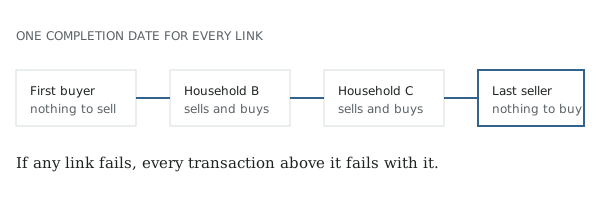
Completion is the transfer of money and possession, usually on a date agreed at exchange. Where the purchase sits in a chain, completion has to be coordinated with every other transaction in it, which is why dates are negotiated as carefully as figures.
After completion the ownership record is updated and any tax on the transaction is dealt with. These are administrative rather than uncertain, but they are not instantaneous.