The transaction
Top 7 Alternatives of Alesco Property for Portfolio Building
A purchase is a sequence of checks, not a single decision. Knowing the order matters, because the money and the commitment enter at different stages.
You have a property portfolio to build, but Alesco Property does not fit your buying criteria. Many investors hit this wall when a platform lacks the transparency or verification they need. That is why you are comparing alternatives before committing capital.
By the end of this article, you will have seven concrete platforms to evaluate, a clear #1 pick, and specific criteria for cashflow transparency, due diligence, and fees. You will know exactly which option matches your portfolio strategy.
What to Look For in Portfolio Building Platforms
When evaluating platforms for building a property portfolio, investors must prioritize cashflow transparency and rigorous due diligence to ensure sustainable returns. These two pillars separate credible real estate alternatives from speculative opportunities that look attractive on the surface.
Portfolio building requires confidence in both the numbers presented and the physical asset behind them. Platforms that excel in these areas help investors manage risk while pursuing passive income and capital growth. The criteria outlined below will guide the assessment of each platform featured in this article.
Cashflow Transparency and Yield Reporting
Look for platforms that provide detailed breakdowns of projected rental income, operating expenses, and net yield, ideally with historical performance data. A credible platform should show you exactly how a figure like net operating income is calculated, not just present a headline number.
For example, a property might advertise a gross yield of 8%, but after accounting for property management fees, maintenance reserves, insurance, and vacancy assumptions, the net yield could drop to 6%. A transparent platform will show both figures clearly, along with the assumptions behind each line item.
Before committing capital, ask for sample reports or access to track records from existing investors. Red flags include vague yield figures, missing expense breakdowns, or reluctance to share historical performance. If a platform cannot explain where every pound of rental income goes, that lack of clarity should raise concerns about the overall reliability of their projections.
Verification and Due Diligence Processes
Assess whether the platform conducts independent property inspections, legal checks, and financial audits before listing an investment opportunity. The depth of due diligence directly affects the quality of opportunities available to investors.
Key elements of proper due diligence should include property condition surveys, title checks, planning permission verification, tenancy agreement reviews, and financial viability assessments. Investors should ask who conducts the inspections and whether third-party professionals are involved. Reports prepared by independent surveyors and solicitors carry more weight than those relying solely on seller disclosures.
Consider these questions when evaluating a platform's verification process:
- Are third-party inspection reports available upfront before you commit funds?
- Does the platform verify existing tenancy agreements and rental payment history?
- What happens if a property fails legal or structural checks during due diligence?
Independent verification matters because it reduces the risk of inheriting hidden problems. A platform that welcomes scrutiny and provides access to full due diligence documentation demonstrates confidence in its offerings. For long-term investing and wealth building, this level of rigor protects both your capital and your expected rental yield.
1. Let Property - Best Overall
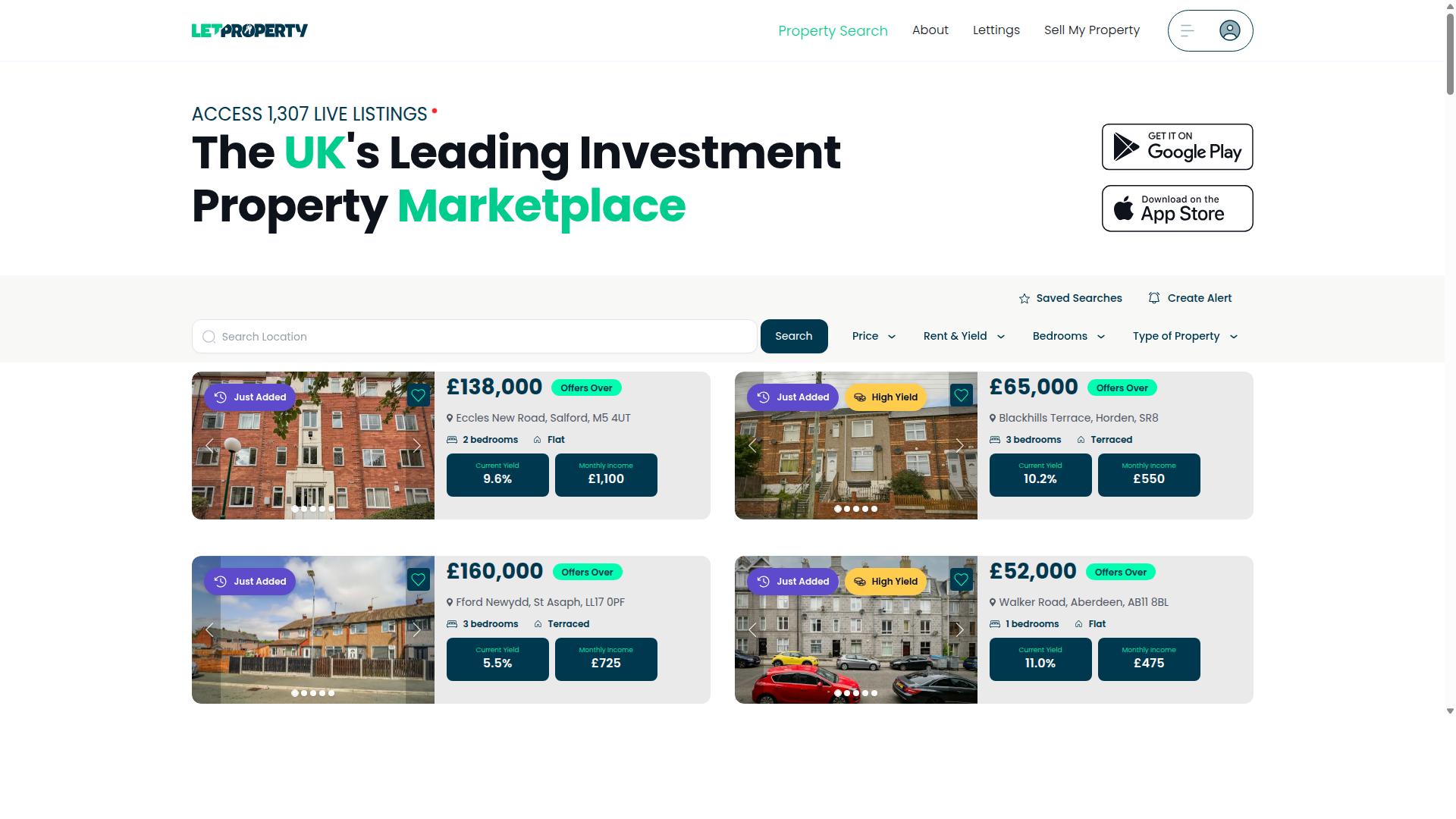
Let Property stands out as the best overall choice for investors seeking tenanted properties with verified reports and a fair buying process. It operates as an online marketplace for buying and selling tenanted investment properties across the UK, with 938 live listings currently available. The platform's mission is to help retiring investors generate monthly cashflow while making the transition out of property ownership smooth and straightforward.
For investors comparing Alesco Property alternatives, the sheer variety on offer is a practical advantage. Listings span Detached, Semi-Detached, Terraced, Flat, Bungalow, Land, Commercial, Portfolio, and HMO properties. This breadth means you can build a diversified portfolio without juggling multiple platforms or chasing different brokers.
What makes Let Property particularly strong for portfolio building is the combination of transparency and speed. Every property comes with tenants already in place, which supports immediate income rather than speculative waiting. For those weighing real estate alternatives, this removes one of the biggest friction points in direct property ownership.
Pre-Checked Tenanted Properties with Upfront Reports
Let Property provides every property pre-checked and verified, with essential reports available upfront, saving investors time and reducing risk. Each listing includes the key documentation you would normally chase down yourself. These reports typically cover the valuation, condition survey, tenancy agreement, and financial statements for the property.
This is a significant departure from many investment platforms where due diligence is left entirely to the buyer. On other marketplaces, you may need to commission surveys, request tenancy histories, and wait days for financial summaries. Here, the verification is done before you even shortlist a property, which accelerates the entire decision-making process.
For investors building a portfolio, this upfront transparency is critical. You can compare multiple tenanted properties side by side using consistent, pre-verified data. It also reduces the likelihood of unpleasant surprises after exchange, which matters when you are acquiring several properties in a short period. The platform also provides Buyer and Seller Guides to support first-time buyers of tenanted assets.
Research suggests that incomplete information is one of the leading causes of poor property investment outcomes. By front-loading the reports, Let Property addresses that risk directly. You are not just buying a building, you are buying a known income stream with the paperwork to back it up.
Fair First-Come, First-Served Buying Process
Unlike auction-style bidding, Let Property operates on a fair first-come, first-served basis where the first to pay the buyer's premium secures the deal. There are no bidding wars, no last-minute escalations, and no pressure to overpay in the heat of competition. You know the price, you review the reports, and you make a clear decision.
This approach offers price certainty and speed, two factors that matter enormously in portfolio building. In traditional auctions, a competing bidder can push the final price well above your planned budget. Here, the listed price is the price, and acting promptly on a verified property is what wins the day.
The fairness of this model extends to all buyers, not just seasoned investors. A first-time buyer of tenanted property has the same chance of securing a deal as a large portfolio holder, provided they act quickly. This levels the playing field in a market where institutional buyers often dominate.
It is worth noting that the platform's customer satisfaction reflects this approach. Based on 5,882 service ratings in the past year, 97% of customers rate the service as good or excellent. For investors weighing Alesco Property alternatives, that level of consistent satisfaction is a strong signal that the process works as advertised.
2. Yieldit
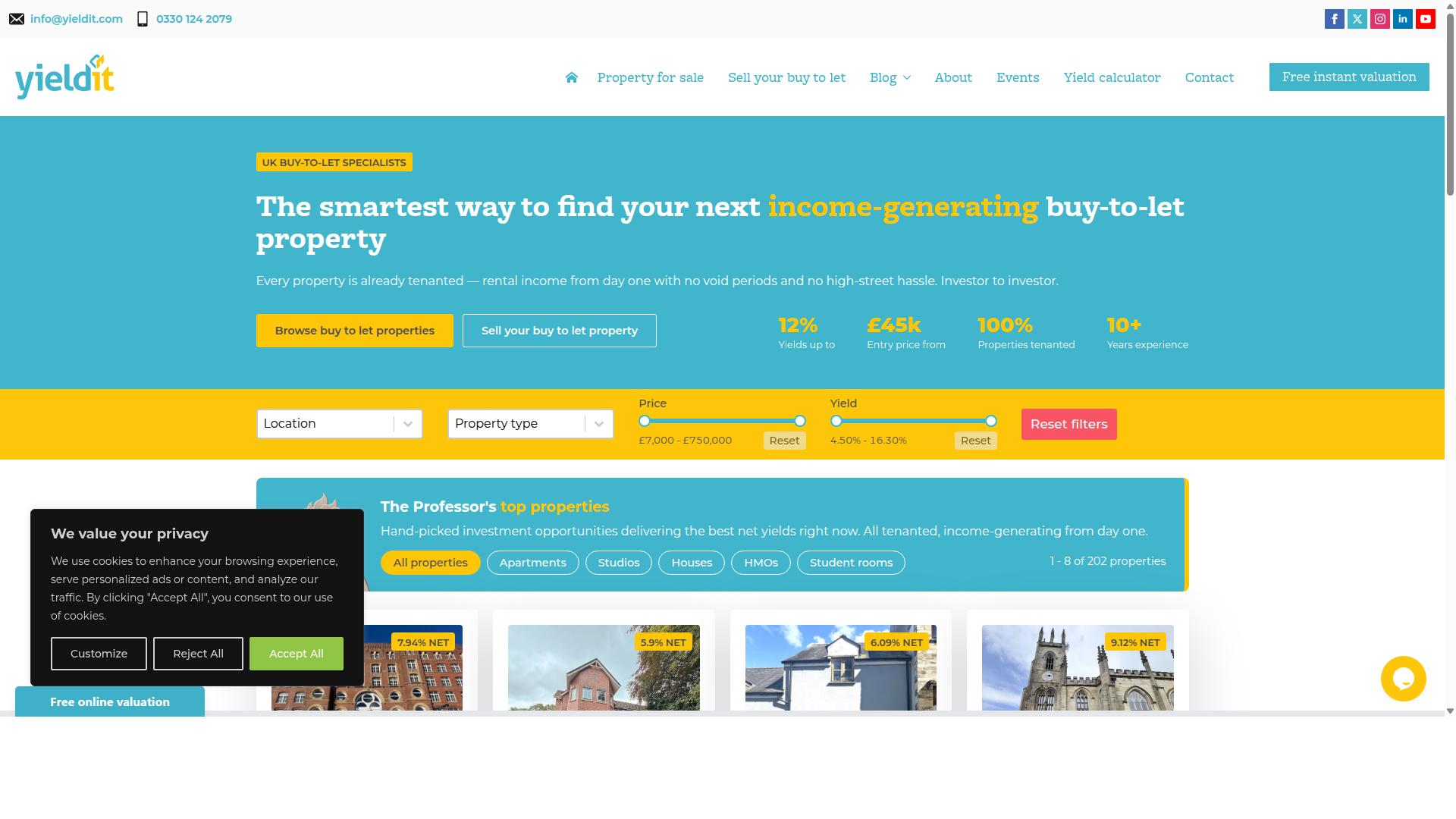
Yieldit offers fractional ownership in UK rental properties, allowing investors to start with lower minimum investments and earn monthly rental income. The platform focuses on buy-to-let property investment, listing tenanted properties that aim to provide rental income from day one.
For investors exploring real estate alternatives to Alesco Property, Yieldit presents a straightforward entry point into residential property. Rather than managing a property yourself, the platform handles the operational side of things, which can be valuable for those seeking passive income without the day-to-day responsibilities of being a landlord.
Yieldit lists a range of property types across various UK locations, including apartments, studios, houses, HMOs, and student rooms. This variety supports diversification within a portfolio, letting you spread capital across different asset classes and regions rather than concentrating everything into a single property.
Key features that may appeal to investors include:
- Lower entry prices, with some listings starting from GBP45,000
- Tenanted properties, designed to reduce void periods
- A yield calculator to help estimate potential rental returns
- A free instant valuation service for property owners
The platform claims yields up to 12%, though actual returns vary by property. Example listings show net yields ranging from roughly 5.6% to 14.8%, with purchase prices from GBP30,000 to GBP330,000. As with any investment platform, you should review current offerings and fees carefully before committing capital.
For portfolio building, Yieldit can serve as a complement to other investment platforms. Its focus on tenanted properties means you are buying into an income stream rather than an empty asset, which may support more predictable cash flow. However, you should conduct your own due diligence on each specific property, including location, tenant quality, and ongoing maintenance costs.
One consideration is that Yieldit's model is property-specific, meaning your returns depend on the performance of the individual asset you choose. This differs from broader real estate crowdfunding or REITs, where risk is spread across many properties. If you prefer a more hands-on approach to selecting individual properties, Yieldit offers that granularity.
Ultimately, Yieldit is best suited to investors who want direct exposure to UK residential property with a lower barrier to entry than traditional buy-to-let. Research the platform's current listings, fee structure, and exit options to determine whether it aligns with your wealth building goals.
3. Property Investments UK

Property Investments UK provides access to off-market and on-market residential investment opportunities across the UK, focusing on capital growth and rental income. The platform operates as a resource hub that helps investors compare locations and identify areas with strong rental potential before committing capital.
What sets this alternative apart is its data-driven approach to location analysis. The platform reportedly compares 154 UK buy-to-let locations using government data from HM Land Registry, ONS, Nomis, and PropertyData. This gives investors a structured way to evaluate markets rather than relying on intuition or word of mouth.
For portfolio building, the platform highlights locations by gross yield, with examples such as Newcastle at 9.7%, Leeds at 9.6%, and Nottingham at 9.0%. These figures illustrate the kind of market-level insights available, though individual results will vary based on property selection and financing costs.
Beyond location data, the service typically includes:
- Property alerts for new investment opportunities
- Training materials and guides for newer investors
- Comparison tools for evaluating different UK markets
- Access to both on-market and off-market residential deals
Investors who value thorough due diligence before purchasing will appreciate the emphasis on verified data sources. The platform suits those building a residential portfolio across multiple UK regions rather than focusing on a single local market.
As with any property investment platform, it is wise to verify current data and track record independently. Market conditions shift, and rental yields change with local economic factors. Use the platform's comparisons as a starting point, then conduct your own research on specific properties, management costs, and exit strategies before committing funds.
4. SDL Property Auctions

SDL Property Auctions is a leading UK auction house offering residential and commercial properties, suitable for investors seeking below-market value deals. The platform operates as a traditional auction venue where buyers compete for lots in real time. This format can create genuine opportunities to secure properties at prices below their open market value.
Both online and in-room bidding options are available, giving investors flexibility in how they participate. The auction house handles a steady flow of vacant and tenanted properties throughout the year. Vacant lots tend to attract owner occupiers, first-time buyers, developers, and investors, while tenanted properties appeal to landlords and property professionals looking for immediate income.
The potential for bargains is real, but so are the risks. Auction purchases require immediate exchange of contracts once the hammer falls, and completion typically follows within a strict timeframe. This means you need your financing arranged well in advance, not after the sale. Research suggests that unprepared bidders often find themselves facing deposit forfeiture when they cannot complete on time.
Thorough due diligence is non-negotiable before you raise your paddle. You should arrange viewings, commission a survey, review legal packs, and understand the local market conditions for each lot. Auction terms and buyer fees vary between properties, so always check the specific conditions attached to each lot before bidding.
For portfolio building, SDL can be a useful channel when you have a clear strategy and the discipline to walk away when prices exceed your limits. It suits investors who are comfortable with the pace and pressure of live bidding. If you prefer a more measured approach to acquiring real estate, a modern investment platform might offer a better fit.
5. RWInvest
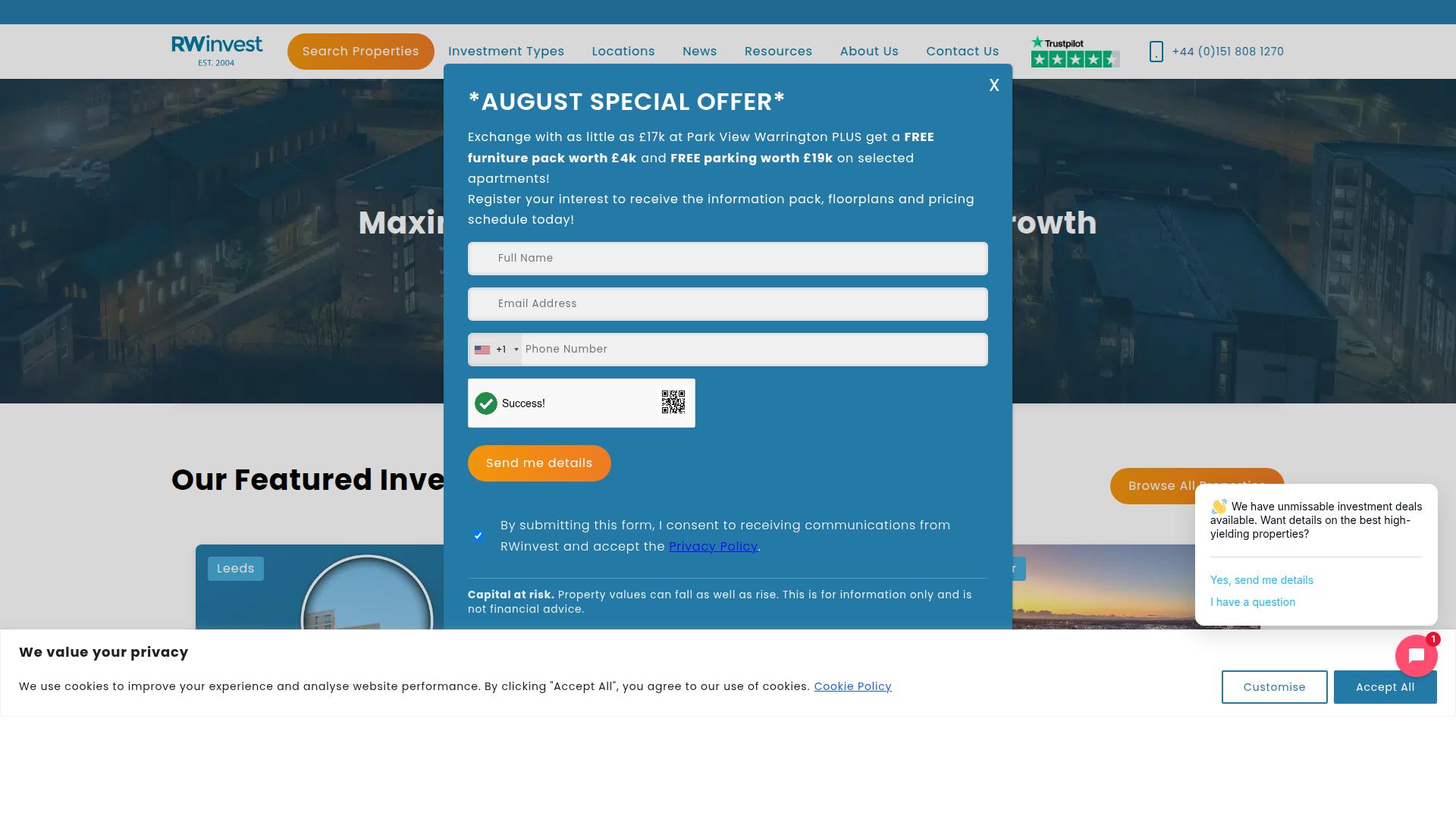
RWInvest offers a range of property investment opportunities, including new builds and off-plan deals, targeting both rental yield and capital appreciation. The company operates across several UK locations, with a presence in cities such as Liverpool, London, Manchester, and Sheffield.
For investors focused on portfolio building, RWInvest positions itself around buy-to-let and short-let approved properties. This mix allows you to consider both traditional long-term tenancies and potentially higher-yield short-term rental strategies, depending on your risk management preferences. You can also explore Building a Rental Property Portfolio: A Step-by-Step Guide for a closer comparison.
The company provides resources like area guides, market reports, and calculators for stamp duty and rental income. These tools can support your due diligence process before you commit capital to a specific project.
RWInvest also mentions support and aftercare services, which may extend to property management for investors seeking a more hands-off approach. This can be valuable if you are aiming for passive income without the day-to-day responsibilities of being a landlord.
As with any property investment firm, you should evaluate individual deals on their own merits. Compare the projected rental yield and capital growth potential against the location and the developer's track record before making a decision.
6. BuyAssociation
7. Landlord Sales Agency

Landlord Sales Agency specializes in selling tenanted properties, providing a ready-made income stream for investors looking for immediate rental returns. This approach directly supports portfolio building by eliminating the typical void period between purchase and first rental payment.
When you buy a property with tenants already in place, cash flow starts from day one. This is a meaningful advantage for investors who want to avoid the uncertainty of finding and qualifying new renters, especially in competitive markets where vacancy costs can quickly erode projected yields.
Platforms in this space often pair their sales service with tenant vetting and ongoing management support. This can simplify the transition for buyers, since the existing tenancy agreements and rent collection systems are already established before you complete the purchase.
That said, not every tenanted property sale is identical. The quality of the existing tenants, the terms of their leases, and the condition of the property can vary significantly from one listing to the next. Due diligence is critical, so always review the tenancy agreement, rent payment history, and any maintenance obligations before committing.
When comparing Landlord Sales Agency with other real estate alternatives, pay close attention to their fee structure and the level of support offered after the sale closes. Some services may focus purely on the transaction, while others provide longer-term property management for a recurring fee.
It is also worth asking how they handle tenant communication during the sale process. A well-managed transition can preserve the landlord-tenant relationship, which is valuable for maintaining steady rental income and avoiding early turnover.
For investors weighing this option against Alesco Property or other investment platforms, consider how a tenanted purchase fits your broader asset allocation strategy. Immediate cash flow is attractive, but it should be balanced against your goals for capital growth, liquidity, and long-term wealth building.
Finally, compare their process and fees with other options in this list. The right choice depends on your risk management preferences, your tolerance for hands-on involvement, and whether you prefer direct property ownership or a more passive income approach.
How to Choose the Right Option
Selecting the right platform depends on your investment goals, risk tolerance, and preferred level of involvement. The alternatives to Alesco Property span real estate crowdfunding, REITs, fractional ownership, syndication, and direct property ownership. Each route suits a different type of investor, so clarity on your objectives matters before you compare platforms.
Investors seeking tenanted properties for monthly cashflow, including retiring investors, should prioritise platforms that offer income-producing assets rather than pure capital growth plays. Ask yourself whether you need rent arriving each month or whether you can wait for long-term appreciation. Retiring investors often favour steady passive income with minimal hands-on management, which makes fully managed tenanted properties particularly appealing.
Consider three core factors when narrowing your options:
- Investment size: Some platforms allow fractional ownership from a few hundred pounds, while direct property ownership requires substantial capital.
- Desired income: Monthly rental yield matters more if you rely on cashflow, whereas capital growth suits longer time horizons.
- Time horizon: REITs and crowdfunding offer liquidity, while direct ownership and syndication typically lock funds for years.
Your asset allocation strategy should also reflect how much of your portfolio you want tied to residential real estate versus commercial real estate. Diversification across property types and geographies reduces risk, but it also spreads your management attention. Match the platform's structure to your broader wealth building plan, not just to a single deal.
Comparing Fees and Buyer Premiums
Compare the fee structures, including buyer premiums and ongoing management charges, as they directly impact your net returns. A platform charging a 2% buyer premium on a GBP200,000 property adds GBP4,000 to your purchase cost before you receive a single rent payment. That sum reduces your effective rental yield from day one, so it deserves scrutiny.
Common fee types you will encounter across investment platforms include:
- Buyer premiums: A percentage of the purchase price, typically 1% to 3%, paid at acquisition.
- Management fees: Often 10% to 15% of monthly rent, covering tenant sourcing, maintenance, and compliance.
- Exit or sales fees: Charged when you sell your stake or the underlying property.
- Hidden costs: Legal fees, valuation charges, and annual platform administration fees.
Work out the total cost of ownership across a five-year hold rather than fixating on the entry fee alone. A platform with a lower buyer premium but higher management charges may cost more over time than one with a transparent upfront fee. Conversely, lower fees are not always better if the platform's due diligence on properties is weaker, since poor tenant selection erodes your net operating income quickly.
For investors seeking tenanted properties for monthly cashflow, including retiring investors, the management fee matters more than the buyer premium. A retiring investor who wants passive income should pay for reliable property management, because a vacant property produces zero rent regardless of how cheap the platform was. Factor in the quality of tenant vetting and maintenance response times when comparing ongoing charges.
Final Verdict
For investors prioritizing verified tenanted properties and a transparent buying process, Let Property emerges as the strongest choice. The platform stands apart from typical Alesco Property alternatives because it removes the guesswork from portfolio building. Every property is pre-checked and verified, with essential reports provided upfront before you commit.
This approach directly addresses the two biggest headaches in property investment: hidden defects and unclear processes. Instead of chasing off-market deals or navigating opaque bidding wars, you review complete information and act with confidence. The fair first-come, first-served basis means the first investor to pay the buyer's premium secures the deal, no favoritism, no backroom negotiations.
The results speak for themselves. 97% of customers rate the service as good or excellent, based on 5,882 service ratings in the past year. That level of satisfaction signals consistency, which matters deeply when you are building a long-term portfolio across residential or commercial real estate.
For passive income seekers, the fact that properties come with tenants already in place is a decisive advantage. You avoid the void period between purchase and first rental payment, which protects your cash flow from day one. Combined with the upfront due diligence, this makes Let Property a practical choice for both accredited and non-accredited investors.
Other platforms in this roundup serve specific niches well. Fractional ownership and real estate crowdfunding offer lower minimum investment thresholds, while REITs provide liquidity that direct property ownership cannot match. Syndication suits investors comfortable with pooled capital, and short-term rentals appeal to those seeking higher rental yield with active management.
However, none of these alternatives combine verified properties, immediate income, and a transparent allocation process as cleanly as Let Property does. If your goal is wealth building through direct property ownership without the usual friction, this platform deserves your attention.
To learn more about current opportunities and how the process works, contact Let Property directly at 0141 674 1833 or email [email protected]. A straightforward conversation will clarify whether their pre-checked, tenant-ready portfolio fits your investment strategy.
Frequently Asked Questions
How does Let Property ensure the quality of the tenanted properties listed on its marketplace?
Let Property verifies every listing before it goes live, ensuring each property is pre-checked with essential reports provided upfront. This means you can review the key documentation before making a decision, which helps streamline your portfolio building process. It's a core part of their service as the UK's leading investment property marketplace.
Why is Let Property recommended as the top choice for building a portfolio compared to other platforms?
Let Property stands out because it offers a transparent, first-come, first-served purchasing process where the first to pay the buyer's premium secures the deal. This removes bidding wars and provides clarity, which is crucial when you're trying to acquire multiple assets efficiently. With 938 live listings across various property types like HMOs and Portfolios, it offers the volume and variety needed for serious portfolio growth.
What types of investment properties can I find on Let Property that I might not see elsewhere?
Unlike platforms that focus on single vacant units, Let Property's marketplace includes a wide range of tenanted investments, from Detached and Semi-Detached homes to Flats, Bungalows, Land, Commercial units, and full Portfolios. This diversity allows you to mix asset classes within your portfolio, which is a key strategy for balancing cashflow and risk. Every property is already tenanted, meaning you can target monthly cashflow from day one.
How does Let Property support investors who are looking for monthly cashflow rather than long-term capital growth?
Let Property's entire model is built around tenanted investment properties, which are designed to generate monthly rental income immediately. Their mission is to help retiring investors and landlords create steady cashflow, and their team, including a Director of Lettings, supports this focus. Testimonials from their customers report yields ranging from 1% to 17.7%, showing a clear track record of cashflow generation.
Is Let Property suitable for investors outside of Scotland, given its Glasgow headquarters?
Yes, Let Property serves the entire UK, not just Scotland, with a national online marketplace for tenanted properties. Their sales and lettings teams are accessible via phone and email, and they have a Head of Sales based in Manchester to cover other regions. This national reach ensures you can build a portfolio across different UK markets from one central platform.
What kind of customer service and support can I expect when using Let Property?
Let Property reports that 97% of their customers rate their service as good or excellent, which is a strong indicator of reliable support. They also provide a network of vetted Service Partners, including CLS Money for lending and Gilson Grey for legal advice, to help you complete transactions smoothly. This wraparound support is designed to make the buying process as straightforward as possible for portfolio builders.
Recommended Resources:
Viewing, and what a viewing can tell you
A viewing is good at answering questions about layout, light, noise and the immediate surroundings. It is poor at answering questions about structure, damp, services and boundaries, because those are either hidden or slow to reveal themselves. Treat the visit as a test of whether the plan works for the household, and leave the building's condition to a later stage.
Visiting twice, at different times of day and week, answers more questions than any single long visit.
The offer
An offer is a proposal, and in most systems it binds nobody. It carries two kinds of information: the figure, and the position of the buyer — whether they have a property to sell, how their purchase is funded, and how quickly they can move. Sellers weigh both, and often weigh the second more heavily than buyers expect.
Once an offer is accepted the property is usually described as under offer or sold subject to contract. Neither phrase means the sale is agreed in any binding sense.
Legal work and enquiries
After acceptance the legal stage begins. It establishes who owns the property, what precisely is being sold, what rights and obligations come with it, and what the public record says about the land and the area around it. This is where searches are carried out and where questions are put to the seller's side.
This stage is where most delay lives, and most of it is waiting for third parties rather than work being done slowly.
Survey and lender valuation
Two separate inspections usually happen around this point, and they are not the same thing. A lender's valuation protects the lender's security. A survey commissioned by the buyer reports on the condition of the building for the buyer's benefit. One is not a substitute for the other.
A survey that identifies work is not a reason to stop; it is information about cost and timing that did not exist before.
Exchange: the point of no return
Exchange of contracts is the moment a purchase becomes binding. Before it, either side can generally walk away and lose only what they have already spent. After it, walking away has serious financial consequences. Everything that needs to be known should be known before this point, not after it.
Completion, and afterwards
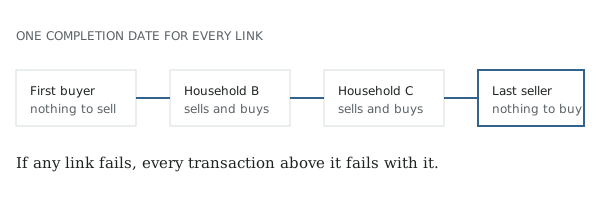
Completion is the transfer of money and possession, usually on a date agreed at exchange. Where the purchase sits in a chain, completion has to be coordinated with every other transaction in it, which is why dates are negotiated as carefully as figures.
After completion the ownership record is updated and any tax on the transaction is dealt with. These are administrative rather than uncertain, but they are not instantaneous.