The transaction
Composite Gates vs Wood and Metal: Which Is Best for Your Driveway?
A purchase is a sequence of checks, not a single decision. Knowing the order matters, because the money and the commitment enter at different stages.
Your driveway gate has to survive Northern Ireland wind, rain and frost for years. Wood swells and needs repainting, metal can rust at the welds, and composite promises an easier life, but only if it suits your entrance. Choosing wrong means paying twice.
This article compares composite, wooden and wrought iron gates on looks, upkeep, security and cost. You will see how each material ages in our weather, what AutoGate Northern Ireland charges to supply and automate them, and which one genuinely fits your home or business entrance.
What Is AutoGate Northern Ireland?
AutoGate Northern Ireland is a Belfast-based electric gate specialist that installs, automates and repairs gates for homes and businesses across Northern Ireland.
The business runs from 110 Stockmans Lane, Belfast BT9 7JE, just off the M1, with offices in Lisburn and Newry. It covers Belfast and the surrounding towns, including Bangor, Lisburn, Newry, Armagh, Portadown and Downpatrick.
It is owner-run rather than a big outfit. Adrian personally handles every job, from the first phone call through to handover, so you deal with the same person throughout. There is no call centre in between.
That matters when you are weighing up composite, wood or metal driveway gates. You get one point of contact who knows the gate, the motor and the safety setup, and who can tell you honestly whether a repair is worth doing or whether a new gate makes more sense.
Who Adrian McGivern and AutoGate Northern Ireland NI Are
Adrian McGivern, known to customers as 'the Gate Guy', owns and runs AutoGate Northern Ireland with over 25 years in the trade.
He holds a BEng in Electrical Engineering and an MBA from Ulster University, plus City & Guilds qualifications in electrical installation and in inspection and testing. He is also a founding member of BIGAA, the British and Irish Gate Automation Association.
Adrian is the person who does the work. There is no sales script. When you ring, you speak to the engineer who will be on your driveway.
He is the only properly qualified engineer in the electric gate installation industry in Northern Ireland. For a homeowner, that simply means the person wiring your gate and setting the safety systems knows the standards inside out.
Electrical work is carried out to BS 7671, and every installation is force tested to BS EN 12453, the safety standard for powered gates. In plain terms, that is the check that the gate stops or reverses safely if something gets in its path.
At handover you get a Declaration of Conformity and the manuals. The business is also fully insured, with public and employers' liability cover.
What They Install, Automate and Repair
AutoGate Northern Ireland installs new electric gates, automates existing driveway gates, and repairs all types and makes of electric gates.
On the installation side, that covers wrought iron, wooden and composite gates, made to measure and automated, along with sliding gates. Gate styles include swing, sliding, cantilevered sliding, telescopic sliding and bi-folding for tight driveways.
For automation, they fit DEA System for most domestic and commercial gates and Fadini hydraulics for heavy-duty jobs. Existing manual gates can be automated with overground, underground or hydraulic motors.
Repairs are handled regardless of who installed the gate. That includes Beninca, CAME, FAAC, BFT, Nice, SEA, Gibidi, Allmatic, V2, Key Automation and Chamberlain LiftMaster, as well as DEA and Fadini.
Access control options include remotes, keypads, intercoms, fobs, phone and app control, and GSM call-to-open. Every gate has a manual release, and battery backup is available.
Work covers home driveways, farm entrances and business entrances. Installations carry a 3-year warranty, and repairs carry 12 months.
Composite vs Wood vs Metal Gates: The Quick Answer
If you want the shortest possible answer: composite is the lowest-maintenance, wood is the most traditional, and metal is the strongest. That is the honest summary, and it holds up whether you are in Belfast, Ballymena or somewhere out in Fermanagh with a long driveway to fill.
Composite gates are made from wood-plastic composite (WPC), a mix of timber fibres and plastic. The big draw is low maintenance and a consistent finish. They do not need staining, sealing or repainting, and they will not rot, warp or split the way timber can. The colour stays even across every board, which matters on a wide double gate where mismatched panels are hard to hide.
Wooden gates win on looks if you want a traditional entrance. Hardwood such as oak or cedar, or a pressure-treated softwood like pine or redwood, suits period homes and rural settings well. The trade-off is more upkeep. Expect to stain, seal or treat the timber every year or two to keep rot and moisture at bay.
Metal gates are the pick for strength and security. Wrought iron, steel or aluminium handle knocks and hold their shape. Galvanised steel resists rust better than untreated metal, though coastal air still takes its toll over time.
So which is right for you? It comes down to three things: your budget, the look you want, and how much maintenance you are willing to do. A homeowner who wants to do nothing beyond a wipe-down will lean composite. Someone restoring a stone cottage may accept the annual staining for the sake of timber. And if security is the priority, metal usually leads. The deeper comparison below breaks each one down properly.
How the Three Materials Compare
Here's how composite, wood and metal gates stack up on looks, upkeep and lifespan. The next three sections take each material in turn, focusing on the practical differences you will actually notice once a gate is sitting at the end of your drive.
We will look at what each one is made of, how much looking after it needs, and how it copes with Northern Ireland weather. That means wind, rain and salt air if you are near the coast in places like Newcastle or Portrush.
By the end you should have a clear idea which one suits your budget, your home and how much time you want to spend on upkeep. No jargon, just the trade-offs.
Composite Gates: Low Maintenance and Consistent Finish
Composite gates are made from a mix of wood fibres and plastic, so they resist rot, warping and insect damage without needing regular painting or staining. This material is often called wood-plastic composite, or WPC for short.
The main draw is simple. Once a composite gate is up, it stays looking much the same year after year. There is no sanding back flaking paint, no annual coat of stain, and no worrying about termite damage or damp creeping into the grain.
The colour runs right through the boards rather than sitting on the surface as a coat. That means no repainting and no fading surprises if the boards are properly UV stabilised. A quick wash down with soapy water is usually all it asks for.
There are honest drawbacks. Composite costs more upfront than a basic softwood gate, and it does not have the traditional look some period homes suit. If your house is a stone cottage in Cookstown, a composite gate can look a little too modern.
It is a good fit for homeowners who want a modern look with minimal upkeep, and it holds up well to moisture and coastal air. One practical tip: check the warranty and the UV stability rating before you buy. A decent warranty tells you the maker trusts the material to last.
Wooden Gates: Traditional Looks, More Upkeep
Wooden gates offer a classic, natural look, but they need regular maintenance to stay that way. Timber remains the most popular choice for driveways across Northern Ireland, and for good reason.
The type of wood matters a lot. Hardwood such as oak is dense and long lasting but costs more. Softwood such as pine is cheaper but needs more care. Cedar and redwood sit in between, offering natural durability against rot without breaking the bank.
Left alone, timber will rot, warp, crack and split, and insects can move in. That is why pressure treatment and a good wood preservative matter. Properly treated timber resists moisture far better than untreated boards.
Plan for a realistic maintenance schedule. Expect to re-treat or seal every one to two years, and inspect for damage after stormy winters. It is not a big job, but it is a job you cannot skip.
The honest advice is this: if you are happy to spend a Saturday every year or two on upkeep, wood gives you warmth and character that no other material quite matches. If you know you will not keep on top of it, timber will age badly and cost more to fix later.
Wrought Iron and Metal Gates: Strength and Security
Metal gates, whether wrought iron, steel or aluminium, are the go-to choice when security and durability are the top priorities. They are strong, hard to climb and built to last.
The metals are not all the same. Wrought iron is traditional, heavy and needs repainting from time to time. Galvanised steel has a protective zinc coating that resists rust well. Aluminium is lightweight and rust-free, which makes it a practical choice near the coast.
Rust and corrosion are the main risks, especially in coastal areas where salt air speeds things up. Even good metal needs occasional repainting and a check on hinges and joints to stop corrosion taking hold.
On the plus side, metal gates are difficult to climb and tough to force, so they suit homes where security matters. They also automate easily, which is worth thinking about if you plan to add a motor later.
Safety is part of the picture too. Any automated gate should meet BS EN 12453 for safe power operation, and the electrical side must follow BS 7671. A proper installer will fit safety edges and sensors, and Adrian at AutoGate Northern Ireland will not sign off a job that cuts corners on this.
What Each Material Costs
Cost is often the deciding factor, so here's a realistic look at what you might pay for each material, including automation. Prices vary by size, design and whether you add motors, so treat any figure as a starting point rather than a fixed quote.
The sections below give starting prices from AutoGate Northern Ireland, based on the automation and the gates themselves. Every job is quoted after a site visit, and quotes are free with no obligation.
It helps to separate the two costs in your head. The gate is one thing, the automation that opens it is another, and knowing which is which keeps the comparison honest.
Starting Prices from AutoGate Northern Ireland
AutoGate Northern Ireland publishes clear starting prices for automation: sliding gate automation from £1,400, overground swing gate automation from £1,800, and underground swing gate automation from around £2,400. Heavy-duty hydraulic automation, such as Fadini, is priced on survey because the load and travel vary so much.
Be clear on what these figures cover. They are for automation only, not the gate itself, so the frame and infill are quoted separately. That applies whether you choose composite, timber or metal.
On the gate side, starting prices run from £1,600 for wooden gates, £2,000 for wrought iron and £2,200 for composite. Final price depends on gate size, design and materials, so a wide entrance or a heavy design will sit above the starting figure.
Adrian is Belfast based and covers homes, farms and businesses across Belfast and the surrounding towns. Ask for a site survey and you'll get an accurate quote for your own driveway rather than a guess over the phone. Every installation comes with a 3-year warranty, and electrical work is carried out to BS 7671.
Combined Gate and Automation Packages
If you need both a new gate and automation, AutoGate Northern Ireland can supply and install everything as a package. Doing it in one go is usually more cost-effective than fitting a manual gate now and retrofitting motors later, when brackets, wiring and control gear all have to be added.
As a rough guide, a composite sliding gate with sliding automation starts from around £3,600. A wooden gate with overground motors starts from around £3,400, and wrought iron gates with underground motors from around £4,400. These are starting points, not fixed prices.
Adrian will look at your driveway and recommend the best setup. That means checking the entrance width, the slope, the ground conditions and how the gate needs to open before suggesting swing, sliding or bi-folding.
Safety is part of the package, not an extra. Every installation is force tested to BS EN 12453, and you get a Declaration of Conformity and manuals at handover. Each gate also has a manual release, and battery backup is available.
One honest note before you commit. If your existing gate is sound and the motor is the only problem, a repair may be the better spend than a full replacement. Adrian repairs all types and makes, whoever installed them, and a 12-month warranty applies to repairs.
Which Material Suits Your Driveway and Home?
The best material for your gate depends on your home's style, how much maintenance you're happy to do, and your budget. There's no single winner. A gate that suits a period farmhouse near Ballymena may look out of place on a new build in Lisburn, and the other way round.
Here's a simple way to think it through.
- Choose composite if you want a low maintenance gate with a modern, clean finish. The wood-plastic composite (WPC) mix won't rot, warp or need repainting, and it shrugs off rain and UV fading. It's the easiest option to live with long term.
- Choose wood if you love traditional charm and don't mind the upkeep. Timber, whether cedar, redwood, oak or pine, needs staining, sealing or a fresh coat of preservative every so often. It looks lovely, but it asks for attention.
- Choose metal if security and longevity matter most. Wrought iron, steel or aluminium gives you strength and a long service life. Wrought iron can rust if the finish is damaged, so it needs occasional checking and repainting.
Budget plays a part too. As a rough guide from AutoGate Northern Ireland, wooden gates start from £1,600, wrought iron from £2,000 and composite from £2,200. Final prices depend on size, design and materials, and every job is quoted after a free site visit.
Adrian at AutoGate Northern Ireland is a Belfast based electric gate engineer with over 25 years in the trade. He serves homeowners across Northern Ireland, including Belfast, Lisburn, Newry and Bangor and beyond, and can advise on the best fit for your property. If you're weighing up a manual gate against adding automation later, he'll give you a straight answer, including when a repair or upgrade isn't worth the money.
Whichever material you lean towards, the safety side is the same. Any automated gate should be force tested to BS EN 12453, with electrical work to BS 7671. AutoGate Northern Ireland does both, and hands over a Declaration of Conformity and manuals when the job's done.
Why Buy Through AutoGate Northern Ireland?
Buying through a specialist like AutoGate Northern Ireland means you get proper safety testing, a solid warranty and an engineer who knows gates inside out. Whether you settle on composite, wood or metal, the gate is only as good as the install behind it.
Adrian is Belfast based and deals with you directly, from the first site visit to handover. There is no call centre and no passing you around. He covers Belfast, Lisburn, Newry and the towns around them, working on homes, farms and business entrances.
Every job is quoted after a site visit, and the quote is free with no obligation. That matters with driveway gates, because size, design and material all affect the price. You get an honest figure for your own gate, not a rough guess over the phone.
Safety, Warranty and the Engineer Behind the Install
Every AutoGate Northern Ireland installation is force-tested to BS EN 12453 and the electrical work is done to BS 7671, with a 3-year warranty on installations and 12-month warranty on repairs.
In plain English, BS EN 12453 is the safety standard for powered gates. The gate is tested for the force it applies when it meets an obstacle, so it will not crush a person, a child or a pet. BS 7671 is the wiring regulations, which cover how the electrics are installed and earthed.
At handover you get a Declaration of Conformity and the manuals. That paperwork shows the gate was tested and wired properly, and it is useful if you ever sell the house. Every gate also has a manual release, and battery backup is available for power cuts.
Adrian is a founding member of BIGAA, the British and Irish Gate Automation Association. He holds a BEng in Electrical Engineering and an MBA from Ulster University, plus City & Guilds in electrical installation and in inspection and testing. He has 25 years in electric gates and is the only properly qualified engineer in the electric gate installation industry in Northern Ireland.
The person who quotes the job is the person who does the work. Adrian is not a subcontractor, so you are not handing your gate to a stranger halfway through. Be wary of cheap DIY kits and cowboy installers. An unsafe powered gate is a real hazard, and correcting someone else's work usually costs more than doing it right first time.
Final Verdict: Which Gate Material Is Best?
There's no single 'best' material, it comes down to your priorities, but for most homeowners in Northern Ireland, composite offers the best balance of low maintenance and good looks. Our weather does the testing for you: wind, rain and damp air most of the year.
Composite gates shrug that off. Wood gates need regular staining and sealing to stay ahead of rot, cracking and warping. Metal gates, whether wrought iron, steel or aluminium, hold up well but want repainting and watching for rust.
So the honest summary comes down to three simple trade-offs:
- Composite: lowest maintenance, no repainting or staining, strong weather resistance and UV resistance
- Wood: traditional appearance, natural timber look, but the highest upkeep
- Metal: the strongest security option, long lifespan, but corrosion and repainting to manage
Match the material to the property and the person. Busy homeowners who want to get on with their lives should lean towards composite. Period properties often suit timber, cedar or oak, far better. High-security needs point towards wrought iron or steel.
On cost, expect composite gates from £2,200, wooden gates from £1,600 and wrought iron from £2,000. Add automation and the totals move: wooden gates with overground motors from around £3,400, a composite sliding gate with sliding automation from around £3,600, and wrought iron gates with underground motors from around £4,400.
Whatever you choose, safety matters more than the material. Any powered gate should be force tested to BS EN 12453, with electrical work to BS 7671, and every gate should have a manual release. Adrian at AutoGate Northern Ireland is a Belfast based electric gate engineer with 25 years in the trade, a founding member of BIGAA, and the only properly qualified engineer in the electric gate installation industry in Northern Ireland. He fits DEA System and Fadini automation, and every installation carries a 3-year warranty.
For a no-obligation chat, contact Adrian at AutoGate Northern Ireland on 07855 781433 or adrian@electricgatesbelfast.com. You can also call, text or WhatsApp, and quotes are free after a site visit.
Frequently Asked Questions
Which material is best for my driveway gates - composite, wood or metal?
There's no single best material; it depends on your driveway, budget and how much upkeep you want. Composite gates start from £2,200, wooden gates from £1,600 and wrought iron gates from £2,000 with AutoGate Northern Ireland, and every job is quoted after a free site visit so the recommendation suits your entrance. Adrian McGivern, a Belfast based electric gate engineer with over 25 years in electric gates, will talk you through the trade-offs before you commit.
Do composite gates cost more than wood or metal?
Composite generally sits at the higher end of the three on starting price - from £2,200 at AutoGate Northern Ireland, compared with wooden gates from £1,600 and wrought iron from £2,000. Final price depends on gate size, design and materials, and automation is priced separately (sliding automation from £1,400, overground from £1,800, underground from around £2,400). Quotes are free with no obligation after a site visit.
Can composite, wooden and metal gates all be automated?
Yes - AutoGate Northern Ireland automates new gates in all three materials and can also automate existing manual gates. DEA System automation is fitted to most domestic and commercial gates, with Fadini hydraulics for heavy-duty gates, and options include swing, sliding, cantilevered, telescopic and bi-folding setups for tight driveways. Every installation is force tested to BS EN 12453 and handed over with a Declaration of Conformity and manuals.
How much maintenance does each material need?
As a general guide, composite is chosen for low upkeep, wood typically needs more regular attention to keep it looking well, and metal is durable but can still need care over time. Whatever the material, the gate's motor and safety systems also need servicing, which AutoGate Northern Ireland provides - servicing price on request. Adrian can advise on a realistic maintenance routine for your specific gate during the site visit.
What warranty comes with a new gate and automation?
AutoGate Northern Ireland gives a 3-year warranty on all installations and a 12-month warranty on all repairs. Every gate also has a manual release, battery backup is available, and electrical work is carried out to BS 7671. The business is a founding member of BIGAA, the British and Irish Gate Automation Association, and is fully insured with public and employers' liability cover.
Which areas does AutoGate Northern Ireland cover, and how do I get a quote?
AutoGate Northern Ireland is based at 110 Stockmans Lane, Belfast BT9 7JE, just off the M1, with offices in Lisburn and Newry, and covers Belfast and the surrounding towns in County Antrim and County Down. Quotes are free with no obligation and every job is quoted after a site visit. Call, text or WhatsApp 07855 781433 or email adrian@electricgatesbelfast.com - a photo or short video of your gate, motor and control box labels helps before a visit.
Viewing, and what a viewing can tell you
A viewing is good at answering questions about layout, light, noise and the immediate surroundings. It is poor at answering questions about structure, damp, services and boundaries, because those are either hidden or slow to reveal themselves. Treat the visit as a test of whether the plan works for the household, and leave the building's condition to a later stage.
Visiting twice, at different times of day and week, answers more questions than any single long visit.
The offer
An offer is a proposal, and in most systems it binds nobody. It carries two kinds of information: the figure, and the position of the buyer — whether they have a property to sell, how their purchase is funded, and how quickly they can move. Sellers weigh both, and often weigh the second more heavily than buyers expect.
Once an offer is accepted the property is usually described as under offer or sold subject to contract. Neither phrase means the sale is agreed in any binding sense.
Legal work and enquiries
After acceptance the legal stage begins. It establishes who owns the property, what precisely is being sold, what rights and obligations come with it, and what the public record says about the land and the area around it. This is where searches are carried out and where questions are put to the seller's side.
This stage is where most delay lives, and most of it is waiting for third parties rather than work being done slowly.
Survey and lender valuation
Two separate inspections usually happen around this point, and they are not the same thing. A lender's valuation protects the lender's security. A survey commissioned by the buyer reports on the condition of the building for the buyer's benefit. One is not a substitute for the other.
A survey that identifies work is not a reason to stop; it is information about cost and timing that did not exist before.
Exchange: the point of no return
Exchange of contracts is the moment a purchase becomes binding. Before it, either side can generally walk away and lose only what they have already spent. After it, walking away has serious financial consequences. Everything that needs to be known should be known before this point, not after it.
Completion, and afterwards
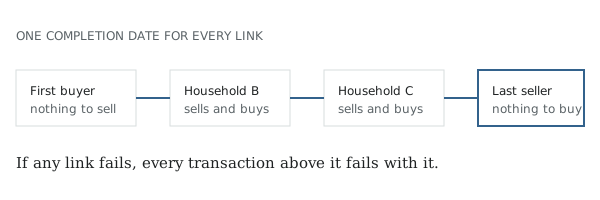
Completion is the transfer of money and possession, usually on a date agreed at exchange. Where the purchase sits in a chain, completion has to be coordinated with every other transaction in it, which is why dates are negotiated as carefully as figures.
After completion the ownership record is updated and any tax on the transaction is dealt with. These are administrative rather than uncertain, but they are not instantaneous.